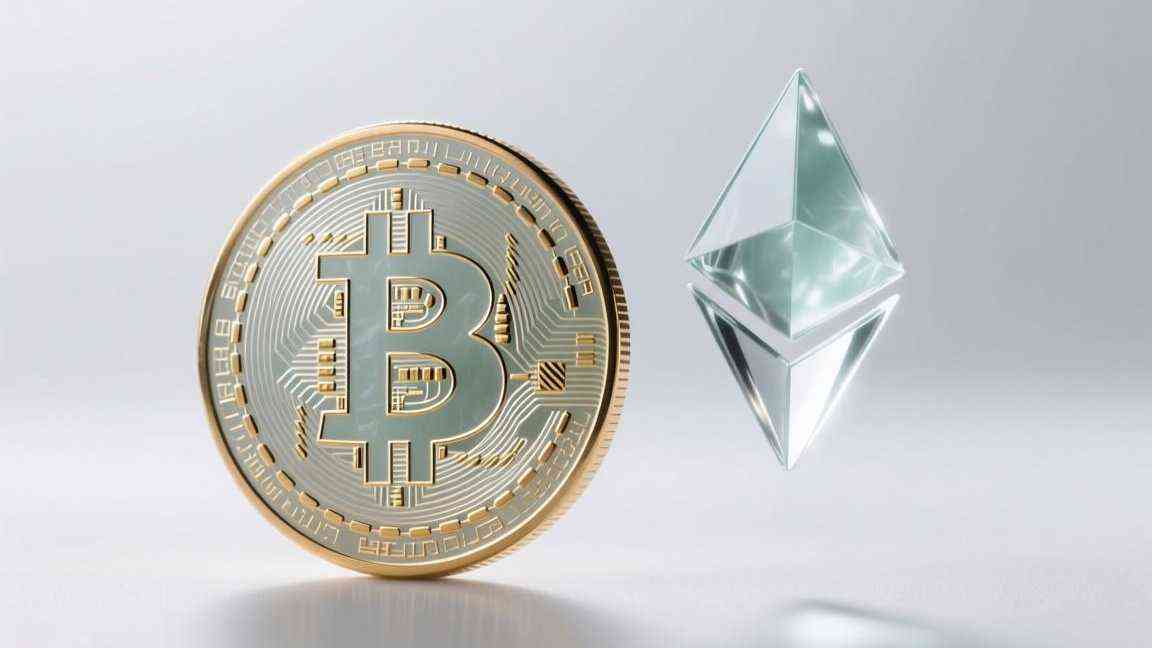
Ethereum, often dubbed the "world computer," is a decentralized, open-source blockchain platform that extends far beyond the capabilities of its predecessor, Bitcoin. While Bitcoin primarily serves as a digital currency, Ethereum’s core innovation lies in its ability to support smart contracts and decentralized applications (dApps), revolutionizing how we interact with digital value, trust, and automation. Launched in 2015 by Vitalik Buterin, a Russian-Canadian programmer, Ethereum has since become the second-largest cryptocurrency by market capitalization and a foundational pillar of the Web3 ecosystem.
What Makes Ethereum Unique? Smart Contracts and dApps
At the heart of Ethereum is the Ethereum Virtual Machine (EVM), a decentralized computing environment that executes smart contracts—self-executing contracts with the terms of the agreement directly written into code. Unlike traditional contracts, which rely on intermediaries (e.g., banks or lawyers) to enforce terms, smart contracts automatically execute when predefined conditions are met, eliminating the need for trust in a central authority. This functionality enables developers to build a vast array of dApps, from decentralized finance (DeFi) platforms and non-fungible tokens (NFTs) to supply chain management systems and decentralized social networks.
Ether (ETH): The Fuel of the Ethereum Network
Ether (ETH) is the native cryptocurrency of the Ethereum network. It serves two primary purposes: first, as a medium of exchange for goods and services within the ecosystem; second, and more critically, as "gas" to power transactions and smart contract executions. Gas fees compensate network validators (formerly miners) for the computational resources required to process operations, ensuring the network remains secure and efficient. The value of ETH is thus closely tied to the utility and adoption of Ethereum’s ecosystem.
Ethereum 2.0: Scaling for the Future
One of Ethereum’s biggest challenges has been scalability—handling a high volume of transactions without incurring exorbitant fees or slow confirmation times. To address this, Ethereum is undergoing a major upgrade known as Ethereum 2.0 (or Eth2). This multi-phase transition aims to improve the network’s efficiency by shifting from a Proof-of-Work (PoW) consensus mechanism (used by Bitcoin) to a Proof-of-Stake (PoS) model. PoS allows validators to "stake" their ETH as collateral to validate transactions, reducing energy consumption by over 99% and increasing transaction throughput. Ethereum 2.0 also introduces "sharding," a technique that splits the network into smaller, interconnected chains to process transactions in parallel, significantly enhancing scalability.
The Impact and Future of Ethereum
Ethereum’s influence extends far beyond cryptocurrency. It has catalyzed the growth of DeFi, which offers traditional financial services (lending, borrowing, trading) without intermediaries, and popularized NFTs, enabling digital ownership of art, collectibles, and virtual assets. Its open-source nature and robust developer tools have made it the preferred platform for builders seeking to create a more decentralized and transparent inte
Looking ahead, Ethereum continues to evolve with ongoing upgrades, layer-2 scaling solutions (e.g., Polygon, Arbitrum), and a growing focus on sustainability. As the backbone of Web3, Ethereum is not just a blockchain—it is a paradigm shift toward a user-owned, decentralized digital future.
In summary, Ethereum’s combination of smart contracts, dApp support, and continuous innovation has solidified its position as a transformative technology in the blockchain space, paving the way for a more open and efficient global digital infrastructure.